English



WILDEN APPLICATION GUIDE
WILDEN Pumps for General Industrial Transfer
General industrial service is rarely a single operating point. A portable pump may see different hoses, vessels and liquids each day. Establish an approved duty list so that moving a pump does not silently change material compatibility or exceed its pressure and temperature limits.

Typical transfer duty
Compatible process liquids, loading, unloading and filtration
Supply vessel → Transfer station → Process destination
What to evaluate
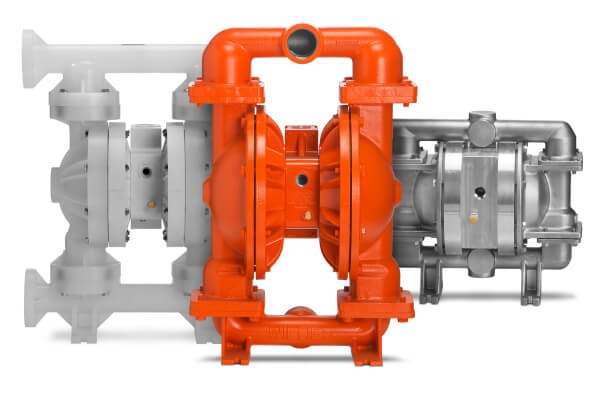
Compare Pro-Flo and Pro-Flo SHIFT models on the required duty, available air supply and maintenance needs. Use a dedicated high-pressure design only where the process requires it and all downstream equipment is rated accordingly.
Selection checklist
List approved fluids and cleaning agents
Record hose length, lift and backpressure
Standardize spare parts by verified configuration
Operating boundary
The same connection size does not guarantee interchangeable performance or repair kits. Identify each pump by its complete model code and part number.
Maintenance and spare parts
Keep the complete WILDEN model code, installed diaphragm material and air distribution system in the maintenance record. Confirm air-kit and wet-kit compatibility separately. Follow the model-specific engineering, operation and maintenance manual for isolation, inspection, fastener torque and reassembly; a generic parts list is not a repair procedure.
Discuss your application
Send the fluid composition, concentration, temperature, viscosity, solids information, target flow, backpressure, suction conditions and available air supply. These details allow a meaningful configuration review and a matching spare-parts recommendation.
Explore WILDEN pumps · Repair kits · Request selection support
Editorial application guidance by Willee. Reference: Wilden General Industrial. This page describes an application, not a customer installation or a guaranteed operating result.