English



WILDEN APPLICATION GUIDE
WILDEN Pumps for Adhesives and Sealants
Sticky materials can form deposits on internal pump surfaces. The maintenance problem may be the way product builds up during stops rather than a simple shortage of discharge pressure. Describe skinning, curing and temperature sensitivity when requesting a pump recommendation.

Typical transfer duty
Compatible water-based and solvent-based adhesive formulations
Formulation tank → Viscous transfer → Packaging station
What to evaluate
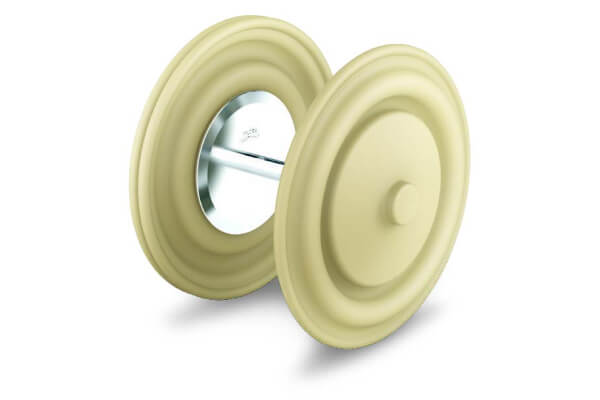
Chem-Fuse integral piston diaphragms remove the conventional exposed outer-piston interface. Their availability and material compatibility must be checked against the exact WILDEN model and formulation.
Selection checklist
Measure viscosity at transfer temperature
Review curing and cleaning behaviour
Check inlet conditions before increasing air pressure
Operating boundary
A diaphragm design does not make every adhesive pumpable. Reactive systems and heated duties require a separate review of temperature, materials and the operating procedure.
Maintenance and spare parts
Keep the complete WILDEN model code, installed diaphragm material and air distribution system in the maintenance record. Confirm air-kit and wet-kit compatibility separately. Follow the model-specific engineering, operation and maintenance manual for isolation, inspection, fastener torque and reassembly; a generic parts list is not a repair procedure.
Discuss your application
Send the fluid composition, concentration, temperature, viscosity, solids information, target flow, backpressure, suction conditions and available air supply. These details allow a meaningful configuration review and a matching spare-parts recommendation.
Explore WILDEN pumps · Repair kits · Request selection support
Editorial application guidance by Willee. Reference: Wilden Adhesives and Sealants. This page describes an application, not a customer installation or a guaranteed operating result.