English



WILDEN APPLICATION GUIDE
WILDEN Pumps for Cosmetics and Hygienic Processing
Cosmetic transfer must protect product appearance, consistency and cleanliness. Record the viscosity range across a batch and the product behaviour during cooling. Separate general-purpose detergent handling from duties requiring documented hygienic design or process validation.

Typical transfer duty
Lotions, shampoos and qualified hygienic process fluids
Batch vessel → Controlled transfer → Filling preparation
What to evaluate
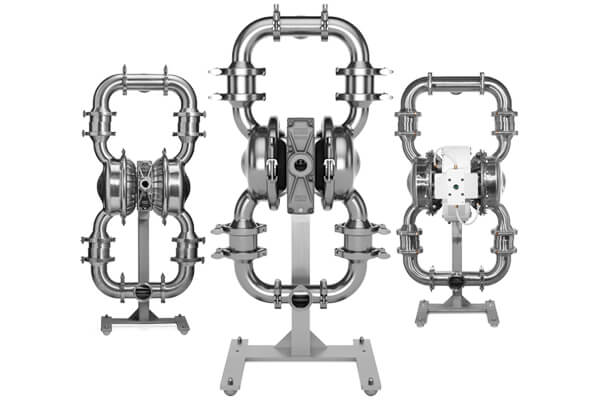
Review Saniflo Hygienic and relevant diaphragm configurations where cleanability and drainage are required. Specify the supporting material and compliance documentation rather than relying on a generic sanitary label.
Selection checklist
Confirm product and cleaning-fluid compatibility
Review drainage and product-retention points
Define the evidence needed for process qualification
Operating boundary
A pump supplier cannot infer sterile-process suitability from the fluid name. The end user must qualify the selected configuration and cleaning process for the actual production requirements.
Maintenance and spare parts
Keep the complete WILDEN model code, installed diaphragm material and air distribution system in the maintenance record. Confirm air-kit and wet-kit compatibility separately. Follow the model-specific engineering, operation and maintenance manual for isolation, inspection, fastener torque and reassembly; a generic parts list is not a repair procedure.
Discuss your application
Send the fluid composition, concentration, temperature, viscosity, solids information, target flow, backpressure, suction conditions and available air supply. These details allow a meaningful configuration review and a matching spare-parts recommendation.
Explore WILDEN pumps · Repair kits · Request selection support
Editorial application guidance by Willee. Reference: Wilden Pharmaceuticals and Cosmetics. This page describes an application, not a customer installation or a guaranteed operating result.